CASE STUDY
Happy English School
Inquiry Generated
Cost Per Lead
Admissions Done
From academics and teacher retention to infrastructure, branding and parent communication, we identified practical changes that could strengthen the school’s value, perception and long-term growth.
Introduction
An established school with decades of experience approached us at an important stage of its growth. It had a strong legacy, an experienced management team and a positive internal culture, but it was operating in an increasingly competitive market where newer and larger schools were changing parent expectations.
The challenge was unusual. The school could not simply compete by adding more land, larger playgrounds or extensive infrastructure. Its physical space was limited, and several shared facilities were already under pressure. At the same time, the management wanted to strengthen the existing school, introduce senior secondary grades and create a distinct early-years offering.
Our consulting exercise therefore began with a larger question:
How can a school grow when increasing its size is not necessarily the best option?
Instead of treating its limitations as weaknesses, we looked for opportunities hidden within them. The strategy eventually touched almost every part of the institution—from academics, teachers and infrastructure to branding, parent psychology and communication.
Challenge
Limited Space and Infrastructure
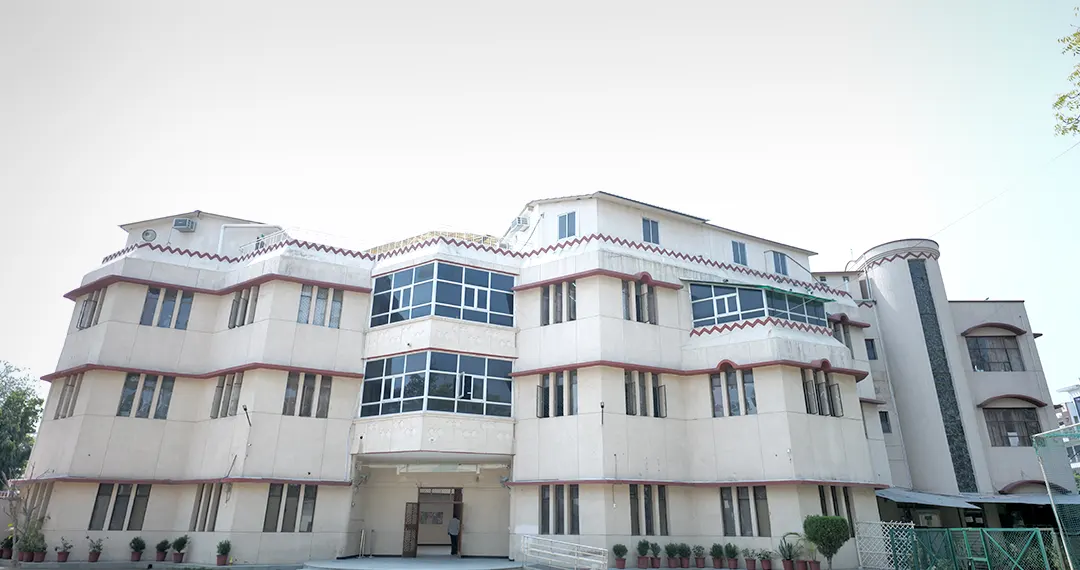
The school operated from a relatively compact campus compared with several competitors. This restricted its ability to offer large sports grounds, expansive common areas and multiple specialised facilities.
Trying to match larger schools facility-for-facility would require considerable investment and still leave the school competing on somebody else’s strength.
The real opportunity was to ask how the available space could create greater value for every student.
Standing Out in a Crowded School Market
Like most schools, the institution could talk about academics, activities and holistic development. But these claims alone would not make it distinctive.
The school needed clear, believable reasons for parents to choose it over larger and newer institutions.
Our assessment identified three areas with stronger potential:
Discipline. Quality Education. Low Teacher–Student Ratio.
Together, these could create a more focused promise around academic seriousness and personalised attention.
Teacher Retention and Academic Quality
One of the most important findings was the connection between teacher stability and the school’s future growth.
While several teachers had stayed with the institution for years because of its positive culture, retention—particularly at some levels—remained a concern.
For a school seeking stronger academic outcomes, losing good teachers repeatedly creates a much deeper problem than recruitment alone. It affects continuity, student understanding, parent confidence and the quality of education itself.
Making Better Use of Existing Space
Several spaces within the campus needed to be questioned not because they had no value, but because something more valuable might occupy the same area.
Facilities such as a dedicated transport room and specialised cricket infrastructure consumed space that could potentially support activities benefiting a much larger proportion of students.
This required the school to move away from the question, “What facilities should a school normally have?” to “What facilities matter most for our particular strategy?”
Building a Distinct Early-Years Brand
The proposed early-years section presented another opportunity.
Simply extending the senior school’s identity downward would have been convenient, but it would not create the emotional connection required for parents of very young children.
At the same time, creating a completely unrelated brand would mean losing the trust already built by the parent institution.
The challenge was therefore to build an identity that could be distinctive yet connected.
Solution
Grow Through Value, Not Simply Student Numbers
Our central recommendation was deliberately counterintuitive.
Instead of defining growth only through increasing enrolments, the school should consider optimising its student strength and creating more value for every child.
With fewer students per classroom, teachers could provide greater individual attention. Shared facilities would experience less pressure. The overall school environment could become more personalised.
This would also create a strong positioning opportunity.
Rather than competing with larger schools on campus size, the institution could compete on something those schools may find difficult to replicate:
personalised education through a genuinely lower teacher–student ratio.
The long-term business objective would be to increase the perceived value of the school rather than simply increase its headcount.
2. Build Parent Preference Around Three Strong Promises
Discipline
We recommended making discipline a visible part of the school’s culture.
This requires clearly defined behavioural expectations, non-negotiable standards and consistent consequences—not arbitrary strictness.
When students, teachers and parents understand where the school stands, discipline becomes more than an administrative policy. It becomes part of the institution’s reputation.
For many parents, a school that combines academic seriousness with respectful behaviour can become significantly more desirable.
Quality Education
Quality education cannot merely be another marketing claim.
It is the foundation upon which every other promise rests.
No amount of branding, facilities or activities can compensate for weak classroom delivery. The school therefore needs to continually strengthen teaching quality, academic performance and measurable student improvement.
Our approach was simple:
build the academic value first, then market what genuinely exists.
Low Teacher–Student Ratio
The school’s compact classrooms could actually become an advantage.
Reducing the number of students in each class by even a few seats could create greater individual attention and allow teachers to know students more closely.
This makes a lower teacher–student ratio not simply a statistic, but a tangible parent benefit.
What appeared to be a constraint could therefore become one of the school’s most defendable propositions.
3. Put Teachers at the Centre of the Growth Strategy
Teachers First Policy
We recommended adopting a clear Teachers First Policy.
This does not mean supporting teachers irrespective of circumstances. It means that when teachers act within established school policies, management should stand behind their authority instead of compromising it simply to avoid difficult conversations with parents or students.
This becomes especially important when strengthening discipline.
The philosophy should also extend to teacher welfare, professional respect and working conditions.
A school cannot expect teachers to continually go the extra mile unless teachers believe the institution will do the same for them.
Five-Year Teacher Retention
Rather than viewing annual teacher replacement as normal, we suggested establishing a long-term ambition of retaining good teachers for approximately five years or more wherever possible.
Such continuity gives teachers time to understand students, families and the culture of the institution.
The school should therefore identify why good teachers leave and address those reasons through an appropriate balance of compensation, workplace culture, recognition and professional opportunity.
Delayed Morning Timings
One surprisingly small recommendation was to explore beginning the school day approximately 15–20 minutes later.
For teachers managing significant responsibilities before reaching school, a small adjustment could materially improve their daily experience.
Transport and operational constraints would need to be evaluated, and the idea could initially be piloted rather than implemented universally.
The larger principle was important: becoming a better workplace often depends on solving many small points of friction.
Teacher Journey on the Website
If teachers are central to the school’s academic promise, they should also be visible within its brand.
We recommended creating a dedicated Teacher Journey section on the website featuring more than qualifications and subjects.
Parents could discover teachers’ professional journeys, teaching philosophies, interests, achievements and years with the institution.
This gives teachers recognition while helping parents connect with the people who will actually educate their children.
4. Strengthen the Reading Culture
Library Corners Inside Classrooms
For younger students, books should be part of the everyday classroom environment.
We proposed small library corners containing approximately 20–25 carefully selected, age-appropriate books.
Students could access them naturally during designated reading periods or available classroom time.
Besides encouraging reading, this would reduce pressure on the central library and allow it to serve senior students more effectively.
It is a relatively small infrastructure investment with considerable educational and branding value.
Continue the Book Club Beyond Grade VIII
The school had already invested significantly in developing reading habits among younger students.
Stopping structured reading opportunities once students reached higher grades risked losing some of that progress.
We therefore recommended continuing a voluntary book club or reading programme for interested students beyond Grade VIII.
The objective was not to impose another academic activity but to allow students who genuinely enjoy reading to continue that journey.
5. Prioritise Infrastructure Instead of Simply Adding It
Activity Room Before Auditorium
Both an auditorium and an activity room would benefit the school, but limited space makes prioritisation essential.
Our recommendation was to develop the activity room first.
Parents of younger children pay considerable attention to creativity, participation, exposure and activities. Since these students also form the feeder base for future higher grades, improving their experience has long-term value.
The activity room would additionally generate authentic visual content for social media and parent communication.
An auditorium could remain part of a later development phase.
Discontinue the Dedicated Cricket Facility
This recommendation required questioning conventional thinking.
Cricket is valuable, but developing a competitive cricket ecosystem requires considerable space, infrastructure and a sustainable pipeline of players.
The school’s limited campus made it unlikely that cricket would ever become its defining competitive advantage.
We therefore recommended examining whether this space could create greater value as an activity room, academic facility, multipurpose space or additional infrastructure.
The idea was not “sports do not matter.”
It was:
Use scarce space where it can benefit the largest number of students and strengthen the school’s chosen positioning.
Eliminate the Transport Room
Our assessment also questioned the need for a dedicated physical transport room.
Routine transport requirements such as route enquiries, changes, timings, onboarding and withdrawals could potentially be managed through the front office or central administration.
If operational review confirms that the room performs no function requiring dedicated space, it should be repurposed.
In a compact campus, every room must justify the value it contributes.
6. Give the Early-Years Vertical Its Own Personality
A Distinct Logo and Visual Identity
The proposed early-years vertical needed to feel different from the senior school without disconnecting from it.
We therefore recommended a connected but differentiated visual identity.
Its logo, colours, imagery and design language should communicate emotions relevant to young children and their parents—happiness, warmth, safety, energy and playfulness.
At the same time, an endorsement from the established parent institution would allow the new vertical to borrow credibility during its early years.
This approach also gives the brand room to grow independently in the future.
Strategic Bus Branding
School buses are moving brand assets.
Where both identities need visibility, we recommended separating their communication clearly rather than mixing multiple logos and messages on the same visual surface.
For example, one side of a controlled school vehicle could represent the parent institution while the other promotes the early-years vertical.
The intention is simple: maximise visibility without creating visual confusion or allowing the two brands to compete with each other.
Consider an All-Female Early-Years Team
For the early-years section, we recommended evaluating an all-female staffing model.
The primary strategic consideration was parent comfort and perceived safety for very young children, particularly around classrooms, washrooms and personal-care situations.
If adopted, it should be positioned as one element within a broader safeguarding and nurturing framework rather than used merely as a promotional claim.
Ultimately, recruitment quality and applicable employment requirements must remain paramount.
7. Build One Consistent Visual Brand
Align Uniforms with Brand Colours
The school uniform travels further than almost any other branding asset.
Every day students carry the school’s identity into neighbourhoods, markets and residential communities.
We therefore recommended eventually aligning uniform colours with the institution’s core brand palette.
Because existing stock and parent expenditure must be respected, the transition could take place gradually over two or three academic cycles.
The larger objective is consistency.
Whether parents see a student, school bus, advertisement, website or campus signage, they should encounter the same recognisable brand.
8. Turn the School’s History into a Brand Asset
Create a Coffee Table Book
A long-established school possesses something a new competitor cannot buy—history.
We recommended documenting that history through a premium coffee table book featuring photographs, milestones, former batches, leadership, teachers, alumni and important moments from the institution’s journey.
This should not look like another admission prospectus.
It should feel like an archival record of the school’s legacy—something parents, alumni, visitors and future generations would want to browse and preserve.
Because creating it properly would require archival research, photography and careful storytelling, we proposed treating it as a long-term brand project.
Until then, curated presentation folders containing academic achievements, alumni stories, awards and milestones could perform a similar role at parent-facing touchpoints.
The Larger Consulting Idea
The most important outcome of the consulting exercise was a change in perspective.
The school did not necessarily need to become bigger to become better positioned.
Limited space could lead to personalised education. Smaller classrooms could support a lower teacher–student ratio. An inability to compete on large sports infrastructure could free resources for stronger academics and student activities. Teacher welfare could strengthen academic performance. A long institutional history could become an important branding advantage.
Our role was therefore not simply to recommend more facilities, more marketing or more admissions.
It was to identify where the school could realistically win—and then align its academics, teachers, infrastructure, operations and brand around that direction.
Sometimes the strongest growth strategy begins not by asking how to remove every constraint, but by asking:
Which of our constraints can be turned into an advantage?